
You can start music today, even if everything feels new.
We will keep it simple and practical, one clear step at a time.
Sound
The note you hear right now.
Time
When a note happens.
Patterns
Small shapes you can repeat.
There are only 12 notes
Music looks huge at first, but the raw building blocks are small. You only cycle through 12 note names before they repeat higher or lower. That means you are not learning endless new things—you are learning familiar sounds in new places.
Same notes, different spots
On guitar and piano, the notes repeat in patterns. Your job isn’t memorizing everything. It’s recognizing the repeats.
Octaves
When a note repeats higher or lower, it’s the same note name—just a different octave.
One octave: C to C
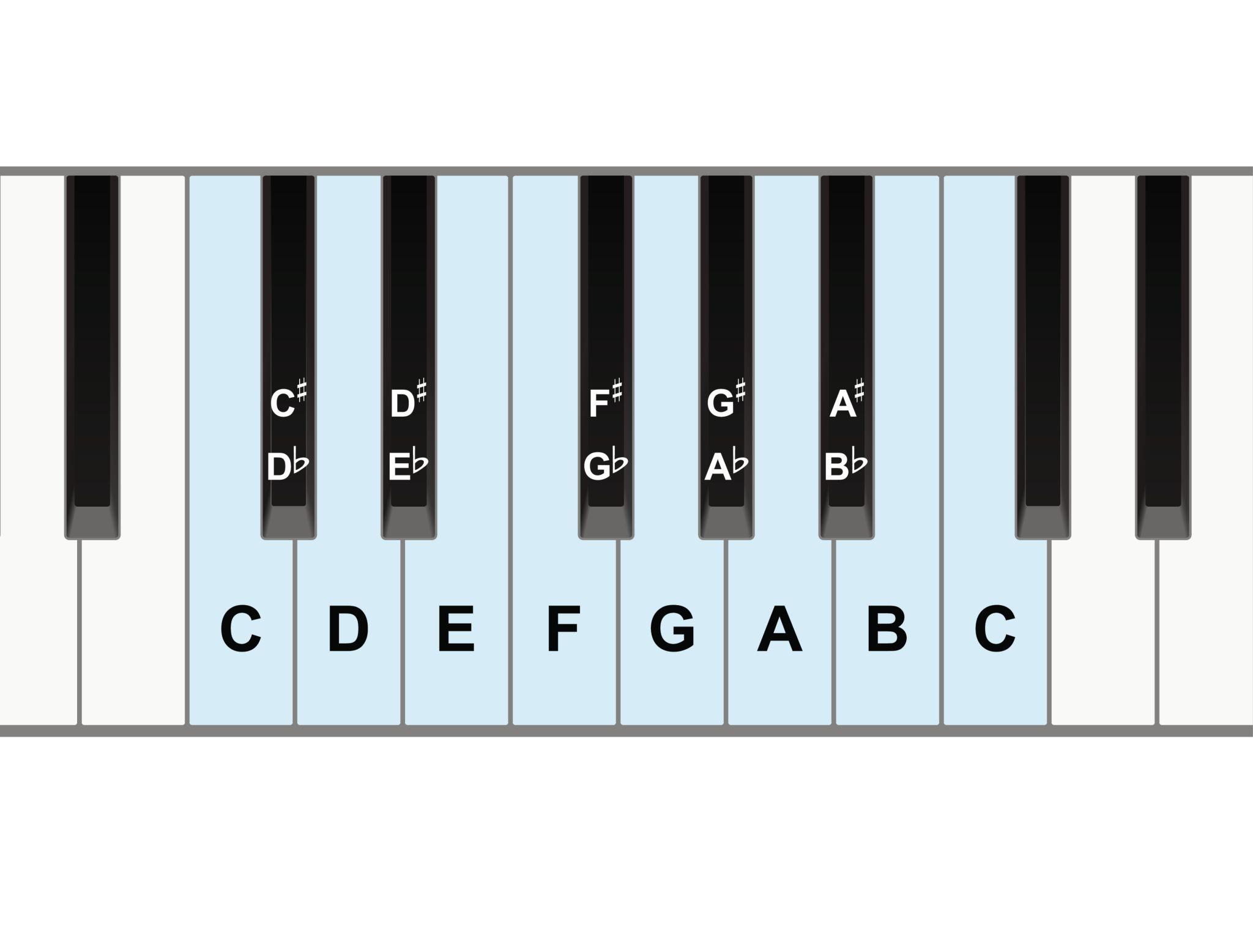
Black keys are the sharps and flats.
A scale is a safe set of notes
Think of a scale as a group of notes that naturally work well together. If you stay inside that group, your playing will usually sound stable and musical.
Major vs minor vibe
Major often feels brighter. Minor often feels darker. Your ears understand this faster than theory.
Chords are stacked notes
A chord is just a few notes played together. If your melody notes come from the same set, things usually sound like they belong.
Example: C Major vs C Minor
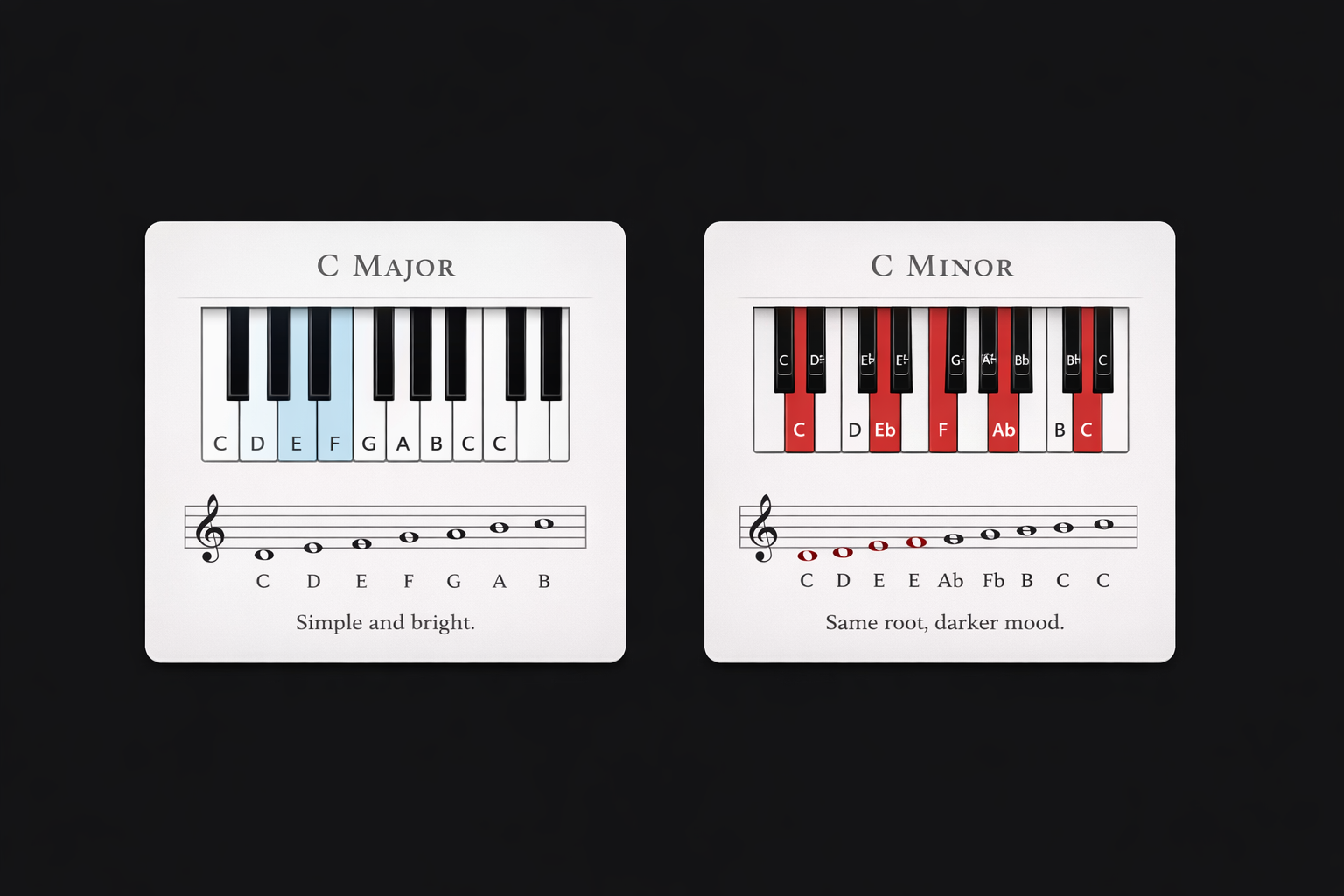
Same starting note (C). Minor shifts a few notes and often feels darker.
A simple 10-minute starter routine
No pressure. Just consistency. Do this daily for a week.
- 2 minutesTap a steady beat. Count slowly: 1-2-3-4.
- 3 minutesPlay any 3 notes. Listen for what sounds “at rest”.
- 5 minutesPick one safe set of notes and explore slowly. No speed.